
Mercy Street
or, on reading Anne Sexton in fifth grade

My dad jokes that he drives for a living, and really just plays music for a few hours wherever he happens to end up. There was a lot of time in the car, when I was growing up. I didn’t mind, because I like to be on my way somewhere, and because of the music.
For a brief while, the music was specifically for children, but that quickly ended, and we listened mostly to things my dad liked, and which my sister and I also liked — Joni Mitchell, Steely Dan, Peter Gabriel. Lots of Peter Gabriel.
When I was ten years old, Peter Gabriel transcended generational boundaries. His lyrics were obtuse and metaphorical, often actively obfuscating when it came to meaning, more about feeling than narrative. I got to experience the adult world these lyrics described like washes of colour, instead of sharp pictures.
At this age, I spent a lot of energy actively trying to prevent my anthropological fascination with adulthood from developing into a full-blown yearning. I figured it was a bad idea to be too anxious to become an adult. I knew I only got to be a child exactly once, and figured that this was likely by design, even if I did not completely understand it. Why would things be set up this way, if it were not important that I experience my childhood the whole way through? I heard adults talk about people who “grew up too fast” and were left psychologically truncated in adulthood — paradoxically eternal children, forever sinking into the unstable foundation of their lives. I did not want this to happen to me.
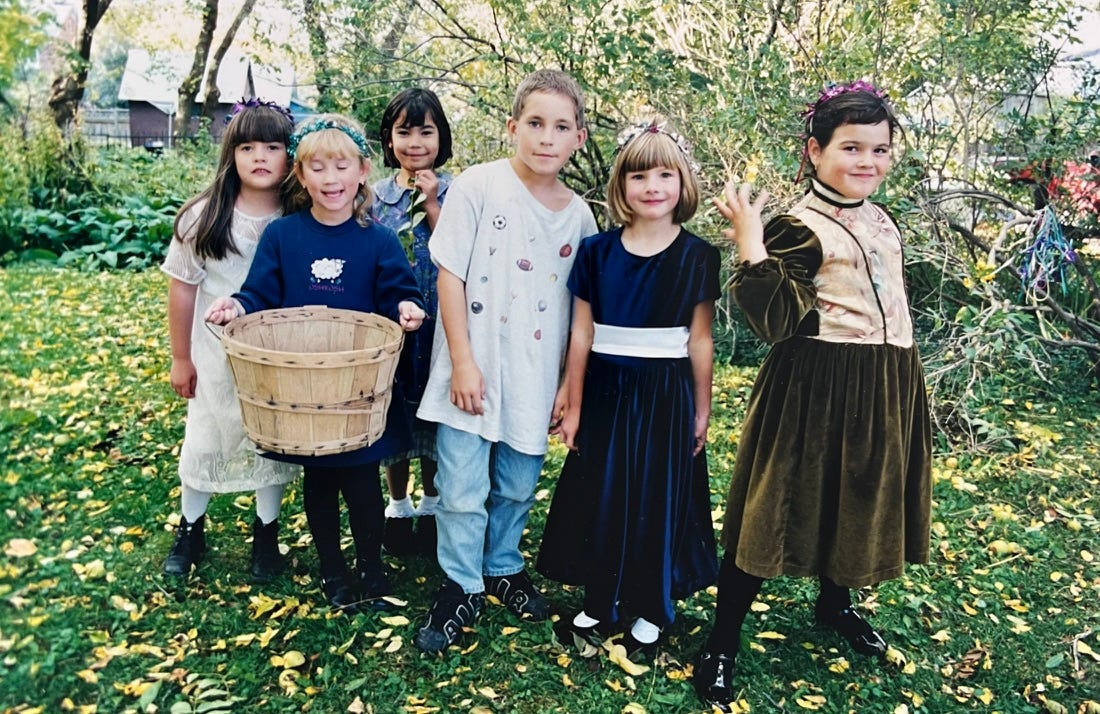
This frustrated me because I generally did not feel like I could relate to other children. I’m not sure I much enjoyed being a child, or at least I know I didn’t enjoy it somewhere approaching half the time. I treated being a child like it was my job, something I had to do before I could get on to the much-more-interesting work of adulthood. Adulthood was the job I wanted, but there wasn’t anything I could do, except — if you will permit me the metaphor — get a job in the mailroom (accept that I was a child) and work my way up (age normally and in real time). So to speak.
I did not even aspire to young adulthood, which at least would have been more normal, more like some of my peers. I had no dreams of partying or the club or even boyfriends until significantly later. I say this not to position myself as somehow superior to anyone who did want these things, but to illustrate for you exactly what kind of weird little dork I was: for as long as I can remember, I have aspired to be middle-aged. My favourite song when I was ten? Building a Mystery by Sarah McLachlan. My favourite film? Under the Tuscan Sun. My femininity was not the bratty femininity of girlhood. I liked girls like that, the way I liked (and continue to like) most girls, but my instincts towards them was usually more maternal than anything else. I, on the other hand, loved long skirts and rattan handbags and floppy summer hats. Womanhood, from what I could tell, was all about tortoiseshell claw clips, full-bodied cabernets, a well-tended herb garden and hard-won wisdom. It was the people who had these things I thought were most interesting.
The adults around me entertained my proclivities. They understood I was not one of them, and as such did not hold me to their standards, but the adults would answer questions I had honestly, when I asked them. I was used to the adults around me generally treating me with respect, and I felt that I could be more myself around them than I could be around other children. Other children, speaking generally, cared very little about the things I cared about. They could barely talk about Peter Gabriel at all.
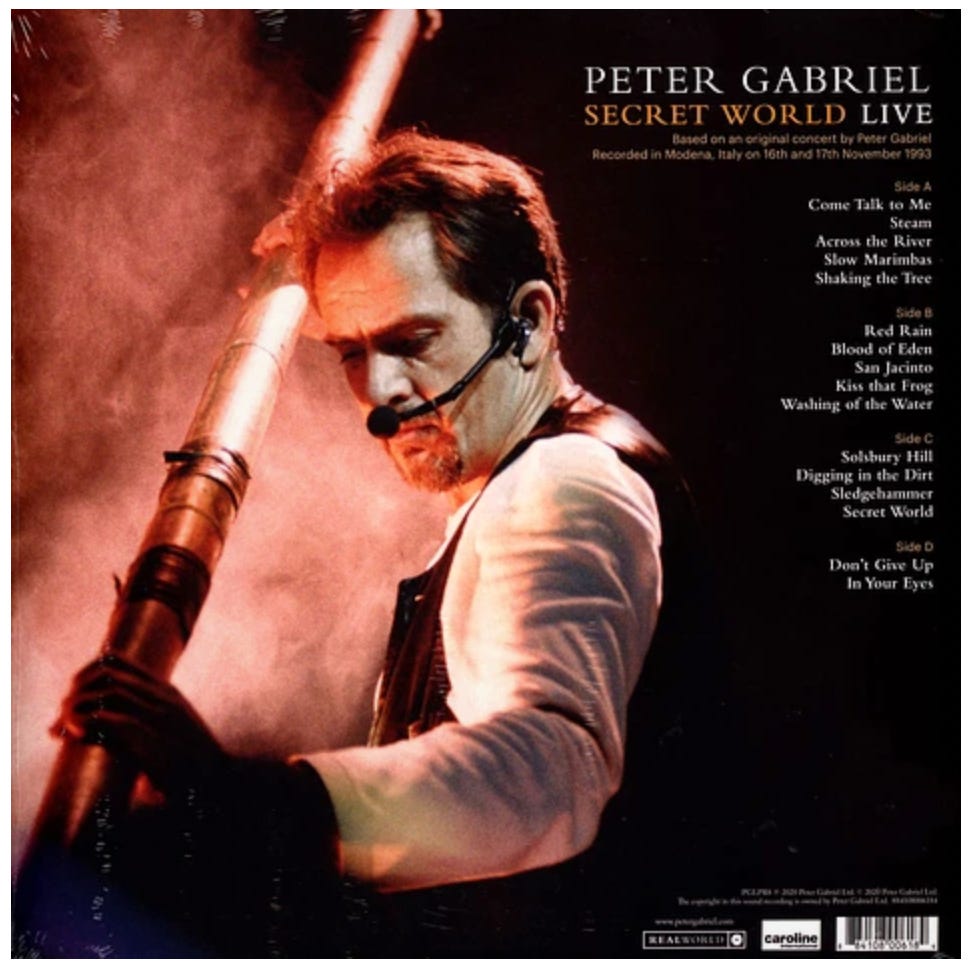
I liked Peter Gabriel because he struck me as very adult. The world still mostly scared and overwhelmed me, and by nine I was already down one parent who could explain it to me. Peter Gabriel he had a playfulness, and a strangeness which read to my child-mind as an adult who confidently understood the world and how to delight in it, which seemed like the the right kind of wisdom to me. I appreciated his unselfconscious emotionality and the way that this emotionality read masculine of an unencumbered, non-violent, creative sort. I liked his falsetto range and his ability to marry triumph and joy and rage and real fear in one song. It was through his music that I was first introduced, in the role of observer, to many adult emotions I would not be able to experience organically for a very long time.
The first time we listened to the Growing Up Live, during the performance of Mercy Street, his band nailed this one harmony, and an emotion entered me as if it had been transmitted directly between our two bodies.
let’s take a boat out, wait until darkness
let’s take a boat out, wait until darkness comes
I wouldn’t feel that feeling again, outside of when I listened to the song, for years. I remember reading somewhere that our emotional range begins simple, as newborns, and gets more complex as we age. At ten years old, I was aware of an emotion so complex that I wouldn’t feel it organically until I was thirty-one, when I came to understand that I was experiencing the moment that shame softens into self-acceptance.
The live version of the song included some of Peter talking about the inspiration for the composition. It was only a few sentences, half in Italian.
It’s the work of this incredible poet, Anne Sexton, that inspired this song, Peter said, on the recording.
Anne Sexton. This was important — a clue, a secret to what this strange, gigantic, melancholically libidinal feeling was and where I could find more of it. The name itself seemed to be of the same quality as the harmony. Simple, elegant, transgressive — hell, it had the word sex in it! This was going to be huge.
I grew up in a very small town. Cannington has a population of a little under two thousand, now, which is a relatively modest increase from the approximately twelve hundred who lived there when I moved away, half my lifetime ago. When I was a child, Cannington only had one intersection that had a traffic light and one building with an elevator, and the rest of it was Victorian farming village, and for a few years I had an anachronistic, Normal Rockwell-styled childhood there, before the rest of the world found us.
In the days before high-speed internet, the town still largely operated on the bike-around-until-you-find-someone-to-play-with model of child culture. It was a place where children free-roamed with little-to-no supervision from sunup until dinner time, in which we made swimming holes where we arguably ought not to have done so, developed and shared a mutual folk mythology of the land we lived on together. I caught frogs in the river and played witches in a cedar grove. There was a back trail where they ripped the old rail line out and I would walk it for hours through pastoral expanses of rural nothingness, all big sky and low trees and tall grass, pretending I was the heroine of some adventure story.
Cannington had a lot of things to like about it, but one thing it did not have was a great public library. The library has since been upgraded, and is better by an order of magnitude, but when I lived there, it was one of many unassuming doors run down the side of a slum-hovel looking building covered in rusty metal siding. It opened into a small interior with two rooms — the library in one room, and the town thrift store on the other. If this sounds quaint, it was not: it looked and felt like a temporary shelter that had been standing too long, with very few windows, harsh fluorescent lighting reflected by peeling and shoe-scuffed linoleum flooring, populated on one side by mass-market mystery-or-romance and on the other by dirty second-hand plastic children’s toys.
I was a child on a mission, however. I walked right up to the librarian. I had been practicing how to say it. I’m looking for books by Anne Sexton, I was going to say. I knew I had to practice, because the name had the word sex in it, and I was sure I was going to get nervous and say it wrong.
I was nervous almost all of the time. I was not a miserable child at all: I was always basically social, friendly, not particularly shy or prone to tantrums.1 I slept and ate well and hit every developmental milestone approximately on time. I was open-minded and interested in new experiences, but I was also sensitive and highly emotional. I was an eccentric, bigger and taller than most children of either sex. I was racially different and dark and intense. I toe-walked and had physical tics where I flapped my hands or frantically ran my fingertips over my scalp. I had a stammer from my brain moving faster than my mouth could keep up, constantly having to stop and retrace my thought process and start all over again.2
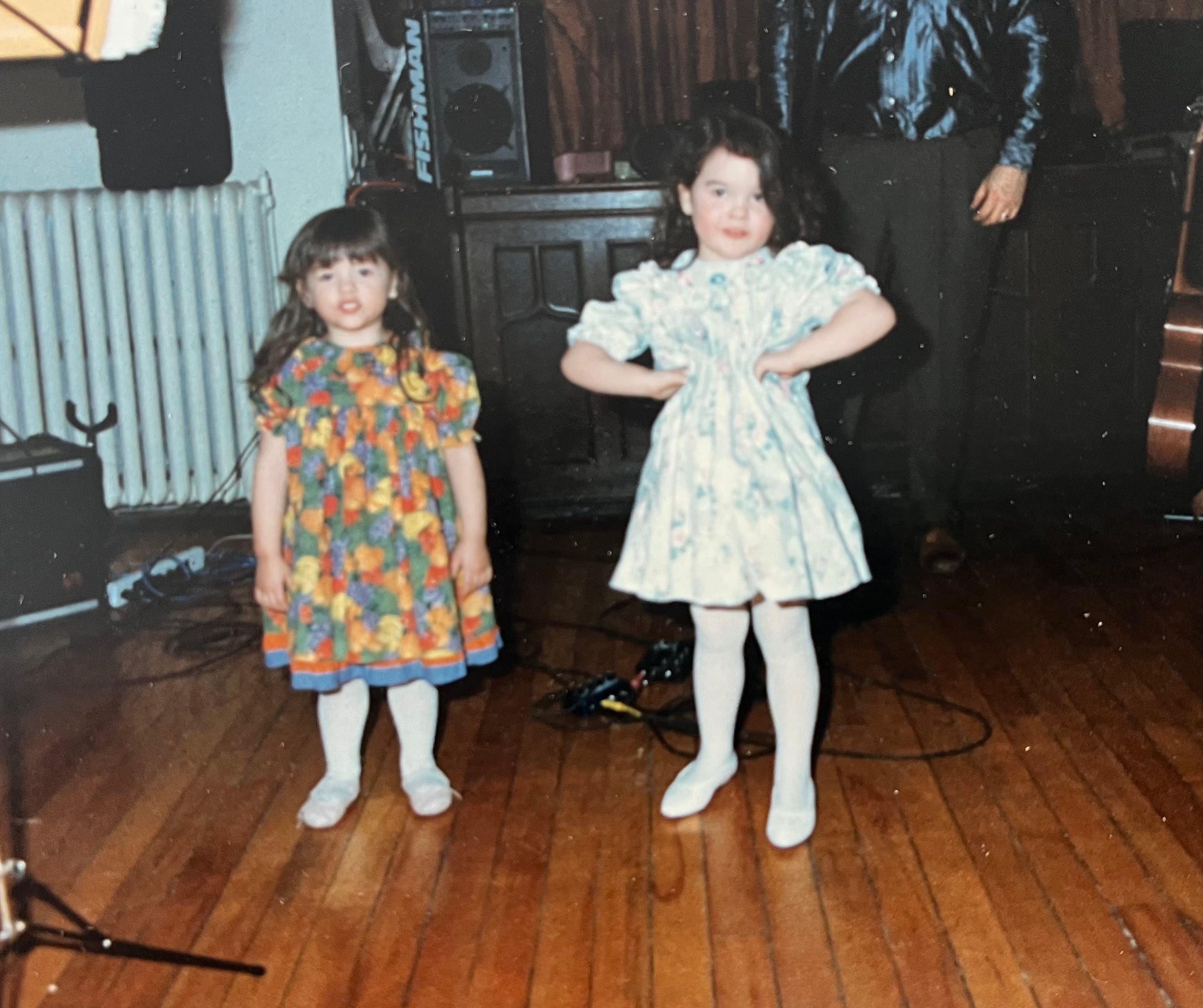
In fact, socially, my strangeness was all basically fine, and then briefly not fine while everyone went through puberty, and then fine again in high school. I think my weirdness might have come across as more of a problem if I was more interested in spending more time in the company of children, but, again, I was not — I was, in fact, largely interested in spending time reading, or else with very understanding bohemian-artist-type adults.
Anyway, what was I saying? Right: the library. I approached the librarian, and said in my practiced tone:
“Do you have any books by Anne Sex—” I stumbled. Oh no. My stammer!
“What?”
“I’m looking for books by Anne Sex. Uh. Anne Sex. I’m looking for books by — I’m looking for books by Anne Sex. Sex — sorry, Sex — Sexton.”
“What was that, sweetheart?”
Get it together, Tara.
“Anne Sexton. Books by Anne Sexton. Poetry.”
“Let me look that up for you,” the librarian said, not phased.
They did not have any books by Anne Sexton. She told me that instead, she could set me up on a computer to read more about her. Red-faced, I nodded. This would have to do, for now.
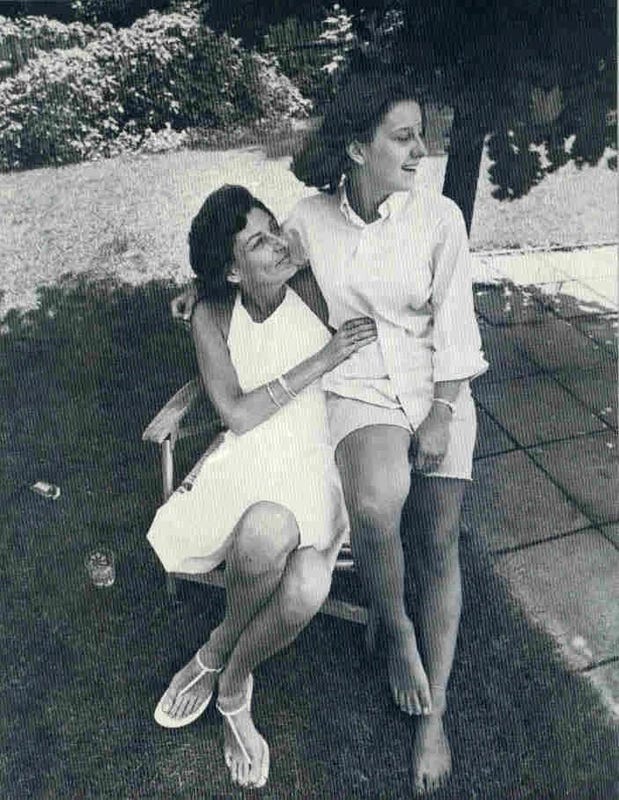
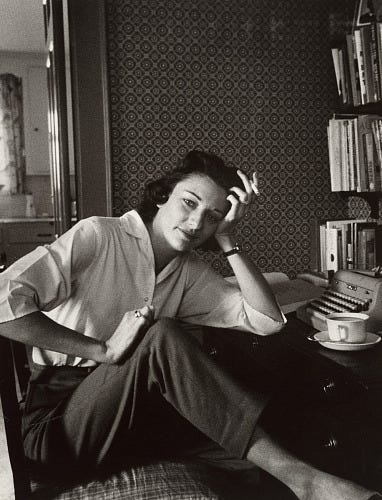
Anne Sexton was, for all intents and purposes, a miserable woman. She was born to materially privileged, abusive parents in 1928. She exhibited the first symptoms of what is now known as bipolar disorder when she was postpartum with her first daughter, Linda, at twenty-five. She began writing poetry on the suggestion of her therapist the first time she was institutionalized. She was almost immediately successful — she’d been published in Harper’s and the New Yorker within a year of her first serious workshop; less than twelve years after writing her first poem she was a Pulitzer prize winner.
Anne was a genius. She was gorgeous and a terror and she was dangerous. She wrote her last book, The Awful Rowing Toward God, “in 20 days, with two days out for despair and three days in a mental hospital.” She left the burden of executing her literary estate to the daughter whose birth had proceeded her breakdown. A few days later, she had lunch with her editor to look over galleys for the book, and then she went home and she killed herself.
After “recovering” memories in a therapy session, under hypnosis and the influence of drugs, Anne Sexton believed that she had been sexually abused by her father and aunt. This account is denied by her other family members, who are comfortable characterizing her upbringing as abusive in many other ways. I know that there are practicing clinicians who insist that recovered memories are real, or even that the doubt cast on them by the medical field is a calculated attempt to cover up widespread child abuse. I don’t think that this is true, and I agree with the consensus of the scientific community that recovered memories are not real at all. Sexton’s longest-practicing psychiatrist considered her to be highly suggestible — for reasons that could have to do with her illness, her personality, or both, she went through phases of mirroring the symptoms of the other people with whom she was institutionalized.3 She had an “alternate personality,” called Elizabeth, who vanished when this personality was no longer directly encouraged by her therapist.4
Anne wrote about her recovered memories in poems like 45 Mercy Street, and her only play, both of which I hold in very high esteem. My appreciation of them is heavily sullied by what I know now about the period of her life in which Anne was writing them. The therapeutic care which Anne received was not good enough, and was frequently actively damaging. Anne’s own abuse history is not corroborated by anything except for her own recovered memories, which are not real — but it’s an established matter of record, corroborated by Anne’s own journals and her therapist’s notes, that in the time after she “recovered” memories in therapy, while she was writing about Mercy Street, Anne had begun molesting Linda.
I’ve heard it repeated multiple times that child abuse is fundamentally cyclical in nature — that all abusive behaviours in adults are the result of their being abused, and that all abused children will grow up to be abusive to children themselves. This is not supported by the evidence.5 I think — especially in highly suggestible, vulnerable people — it can actually serve as a kind of fucked up self-fulfilling prophecy. Unfortunately, this was not the last time Anne Sexton would be failed by her therapist: her longest-serving therapist was replaced in the late 60s. In what is probably the most egregious example of professional malpractice possible, her new therapist slept with her. He faced no consequences for this. This massive violation began the breakdown that ended in her death.
Twenty-eight years after Anne Sexton took her own life, on a clunky computer with bad dial-up internet, I scoured the 2002-era internet for her. I started looking at other, better libraries for books of her poetry. I who was a devoted anthropologist of adulthood was fascinated by this exceptional emissary. Anne Sexton was like human concentrate. I came from a financially modest but very loving family, where I had not been sexually abused and had actually never even considered that this was something that could happen to people. I loved being alive even when it was kind of a drag. I had so much to learn about people from this woman whose life was so radically different than mine. She was like a studio mix with every level turned all the way up.
I knew that the content of what I was reading — Abuse! Suicide! Madness! Incest! — was not wholly appropriate for my age demographic. Most of the girls my age who I knew, if they liked reading at all, were reading the Babysitter’s Club or similar. This did not deter me. In fact, the transgressive aspect of this endeavour was a lot of what I liked about it. It was around this part of my life that I discovered that even really quite caring and attuned adults — the adults who had strong opinions about the amount of violence I was to be subjected to in films and television, for example — were really just impressed to see me reading and asked very few other questions. I am not complaining. I desperately needed rebellion and, unfortunately, had very little to rebel against. This was mostly good, but also annoying, because I generally think that children need to rebel at least a little bit. I think we all have a natural drive towards rebellion. I serviced this mostly by reading things I had no business reading and listening to music that other children didn’t care about.
I’ve spent days, now, trying to work out how to end this essay. There are many options available to me, all of which seem trite. I could make this an Indictment of Bad Parenting essay, in which I caution against adults living any aspects of a life that does not expressly serve their children, lest those children have some kind of brush with the world of adulthood which they do not understand, and grow up to be poets or worse. I wouldn’t do this, of course, because it would be cheap and uncouth and unfair, and because this attitude seems so fearful and Protestant and lifeless, and because Anne Sexton’s work is one of the best things that’s ever happened to me. I could try to sum it all up with a humble-bragged insistence on the exceptional intellectual capacity of my child-self, the last great cope of the Strange Child, as well as largely stolen valour; for all the time I spent on Anne Sexton or the Beats or pretending to understand Shakespeare, I spent exponentially more reading middle-grade fantasy books much more typical of the freshly-pubescent. I could talk about working with children, and my strong belief that the impulse towards censoring books — a minor movement even this far North — will do irreversible damage to the structure of transgression to which I owe my own literacy.
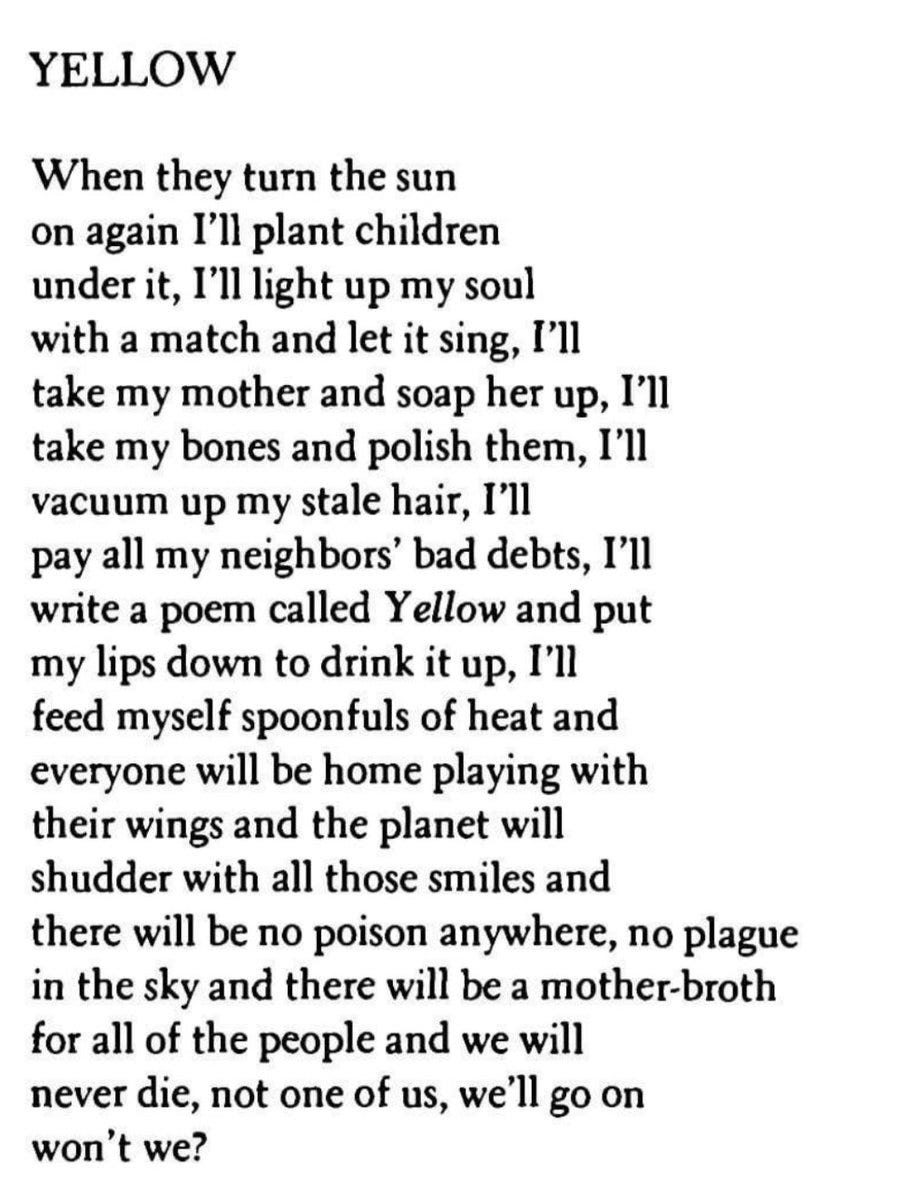
But I don’t think I really mean any of that, either. I think I really just mean that I think of Anne often. I see her everywhere.
Except for the year I was three, when my nickname was “Tara the Tyrant.” I got over it by my fourth birthday.
This had way fewer social consequences than it had any right to. Relatively recently, a friend of mine and I did the kind of drugs I think it’s perfectly acceptable to do once or twice a year, even if you’re otherwise basically boring, and stayed up all night unloading our every childhood woe. When I talked about the hand-flapping, she — who grew up in the Midwest and Brooklyn as an American of middle-Eastern extraction in the time immediately following 9/11 — looked at me with anticipatory sadness. “People must have made that very hard for you,” she said. It was at that exact moment that I realized it had literally never come up.
The line between “mentally ill” and “a bit of an asshole” being notoriously difficult to parse out in an exact way, stories like this inevitably make me think about some mentally ill people I’ve personally known, many of whom also had both an unusually high capacity for affective empathy and abnormally strong permutations of the normal need for attention. There have been a few people I’ve noticed cannot seem to see anyone else struggle with something without immediately developing a version of the problem themselves, at least temporarily, and I was always curious if they were doing it on purpose or as a subconscious, reflexive impulse or as some strange blending of the two things.
Dissociative identities are so heavily wrapped up with recovered memories that it’s almost impossible to separate the two. DeBoer also writes about this in his very well-researched article.
While experiencing childhood abuse increases the risk of abusing others significantly, the “cycle of violence” is overwhelmingly a myth — despite the popular folk belief that it’s child abuse and only child abuse that leads to abusive or antisocial adult behaviour, all data points to the fact that the vast majority of adult abusers were not abused as children, and that the vast majority of adults who were themselves abused as children do not go on to abuse children.
You have probably seen this, being an Anne sexton connoisseur, but just in case, here’s her in her home and reading some of her poems. Very strange to see her interact with Linda. https://youtu.be/L4VlcVfgFJk?si=Xarwu9JelVomd2Eq